A custom home is expensive. The design process is long. The client spends months, maybe years thinking about what they want, and by the time they move in, they've made hundreds of decisions about what rooms the house contains and what those rooms should do. Most of those decisions are good ones. A predictable few are not — and the pattern of which rooms end up wasted and which ones end up missed is consistent enough that I've started treating it as a checklist item in every discovery conversation.
This isn't a list of rules. Every family is different, and a room that goes unused in one household may be the center of daily life in another. But if you're planning a custom home, the patterns below are worth considering — especially the ones that might challenge something you've already decided.
Rooms people consistently regret
The formal dining room
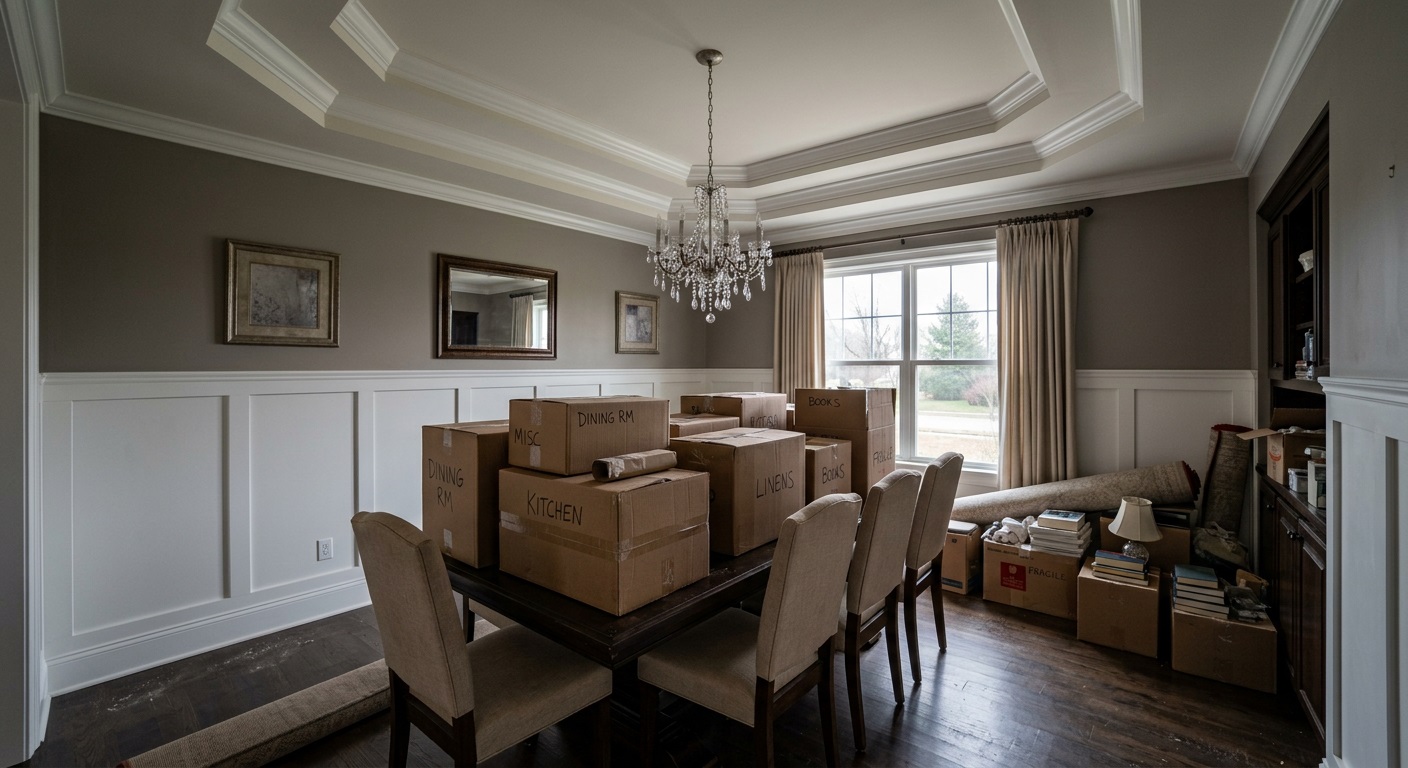
This is a common regret in residential design, and it has been for decades. The formal dining room looks essential when you're planning a house. You imagine holiday dinners, dinner parties, Sunday meals. What actually happens is that families eat in the nook or at an island most nights of the year, and the formal dining room becomes an expensive storage area for a table and eight chairs that get used three times annually.
The honest question to ask yourself is: in the house you live in now, how many times in the last year did you sit down for a formal dinner at a dining table that wasn't also your everyday eating surface? If the answer is fewer than a dozen, a separate formal dining room is probably not the right allocation of your square footage and budget. A larger everyday dining area that can seat more people when needed — properly placed relative to the kitchen, properly proportioned — almost always serves the family better.
The exception: families who genuinely entertain formally and frequently, households with strong cultural or religious traditions around formal meals, and families with elderly members for whom Sunday dinner at a proper table is a genuine weekly event. If that's you, a formal dining room is worth every square foot. If it isn't, be honest about it.
The formal living room
Same pattern, different room. The formal living room — separate from the family room, furnished nicely, kept for guests — sounded important during planning and sits empty most of the year and even worse, is off limits to children. Families don't naturally divide their time between a "good" living room and an everyday one. They gravitate toward where the activity is, and the activity is in the kitchen and the main living space, not in the room with the nice furniture that nobody sits on.
A home with one well-designed, generously proportioned living space almost always serves a family better than a home with two separate spaces, one of which is always empty. The square footage saved goes toward something the family actually uses.
The guest bedroom for no one
This one requires nuance because some families genuinely need a dedicated guest room. If extended family visits regularly and stays for days at a time, a proper guest suite is worth building. But many families include a guest room in their plans because it feels like something a house should have — and the room then goes unused 360 days a year.
The better question is: who specifically is going to sleep in this room, how often, and for how long? If the honest answer is "maybe my mother-in-law a few times a year," a room that can flex — a home office with a pull-out sofa, a children's bedroom with a good extra mattress — may serve the need without permanently dedicating 150 square feet to a room that sits empty. If grandparents are visiting for a week every month, that calculation changes completely.
The craft room that becomes a storage room
People who sew, do crafts, or work on projects frequently want a dedicated room for it. These activities benefit from a dedicated space where projects can be left out and picked up again. The problem is that dedicated craft rooms often end up as a mess. The equipment moves in and the activity doesn't follow, because the room is in the wrong location, or the lighting is wrong, or the room itself doesn't inspire the work.
A craft room that actually gets used is one that was designed around the specific activity: the right counter height, the right lighting, a utility sink, enough storage to keep things organized without being buried, and proximity to the part of the house the person using it spends most of their time. A craft room that was included because it seemed like a good idea but designed as a generic spare room usually fails.
The finished basement dungeon
Finishing a basement is expensive. It's also frequently a mistake in homes where the design didn't think carefully about what the basement is actually for. A basement that serves a specific, identified function — children's bedrooms, a family playroom, an office, a shop — works. A basement that was finished because it seemed wasteful to leave it unfinished, without a specific plan for it, often becomes the lowest-priority space in the house: the place where things go that don't have anywhere else to go.
Light is the other factor. A basement without meaningful natural light or plentiful artificial lighting is a difficult place to spend extended time, regardless of how nicely it's finished. If you were hoping to send the children down to play during bad weather, think again if it is dark and scary. In my home it is the safe place because you can't hear the thunder and there's lots of light.
Rooms people wish they had thought to include
A real mudroom
Not a coat closet. Not a landing strip near the garage door. A real mudroom: a space where people transition from outside to inside, that has bench seating, hooks at multiple heights, dedicated storage for every person's shoes and outdoor gear, durable easy-clean flooring, and ideally proximity to laundry. The mudroom earns its square footage every single day in a household with children, animals, or outdoor activities — which describes most of the households that come to me.
I talk to a lot of homeowners and who skimped on the mudroom because it didn't seem important enough to budget for properly almost always mention it as something they wish they had. I rarely that a mudroom is too big or goes unused — because it just works, every day, without friction or complaint.
A proper pantry
Cabinet pantries have their place, but a walk-in pantry with real shelving and even better a small counter with a dedicated outlet changes how a kitchen functions. It allows small appliances to live somewhere other than the main counter. It creates a staging area for entertaining that keeps the kitchen clear. It holds at least a week's worth of food without requiring the cook to excavate the back of a deep cabinet every time something is needed. For families who cook seriously, shop in bulk, or do any amount of food preservation, the walk-in pantry is among the best-value spaces in the house.
The version that works best: large enough to walk into comfortably with a full grocery bag in each hand, deep enough shelves to hold large containers, at least one counter surface for staging, an outlet for a loud small appliance, and direct sightlines to the kitchen so the cook doesn't lose track of what's happening. The version that fails: too small to use efficiently, shelves too deep to see what's in the back, no light switch inside.
A dedicated home office with a door that closes
The pandemic changed a lot of assumptions about home offices. Before it, many households treated a desk in a bedroom corner as sufficient. After it, families discovered that working from home in a space that doesn't have visual privacy, acoustic separation, or a door that closes is genuinely difficult — and that the problem doesn't go away when the novelty of remote work does.
A home office that actually works has: a door (not a glass door if video calls are regular), acoustic separation sufficient to mute household noise during calls, natural light positioned so it isn't behind the monitor during video calls, and a background that doesn't broadcast whatever is happening in the rest of the house. It also needs to be located where it won't be walked through by family members during work hours. The home office tucked off the entryway has a different success rate than the one at the far end of the hallway that every family member crosses to reach the bathroom.
A nursery adjacent to the primary suite
This one is for families with young children or families who expect to have them. A small room — 80 to 100 square feet — connected to the primary suite by an interior door is one of the most useful things a house can contain during the years when infants and toddlers require nighttime attention. It's close enough to respond to immediately, separate enough for a baby to sleep without waking a partner, and convertible to a closet, a sitting room, or a study when that season of life passes.
Storage rooms that are actually designed
Most homes treat storage as an afterthought — whatever space is left after the rooms are placed gets called a closet or a storage room. The result is storage space that technically exists and functionally doesn't: the wrong shape, the wrong depth, no shelving, no light, inaccessible to anyone actually trying to use it.
Storage that works is storage that was designed. The right depth for what's going in it — deep shelves for large bins, shallower shelves for smaller items. Shelving that goes to the ceiling with a step stool accessible. Lighting that gets into the shelves. A location that's actually on the path between where things are used and where they live when they're not. The square footage allocated to good storage almost always displaces square footage from rooms that don't need it — and the exchange is almost always worth it.
The common thread
The rooms on the regret list share something: they were included because they seemed like things a house should have, not because the family had a clear picture of how they would actually use them. The formal dining room, the formal living room, the guest room for guests who rarely come — all of these are inclusions driven by expectation rather than by genuine understanding of how the household functions.
The rooms on the wish list share something too: they were excluded because they didn't feel important enough during planning, or the family didn't honestly look at how they live their life.
Both lists are arguments for the same thing: a discovery process that asks hard questions about how a family actually lives, rather than one that simply collects a list of desired rooms and draws them. The right rooms for your family aren't the rooms that appear in every house. They're the rooms that reflect what your household does every day — including the things you do so automatically that you've never thought to mention them.